Platformer Template
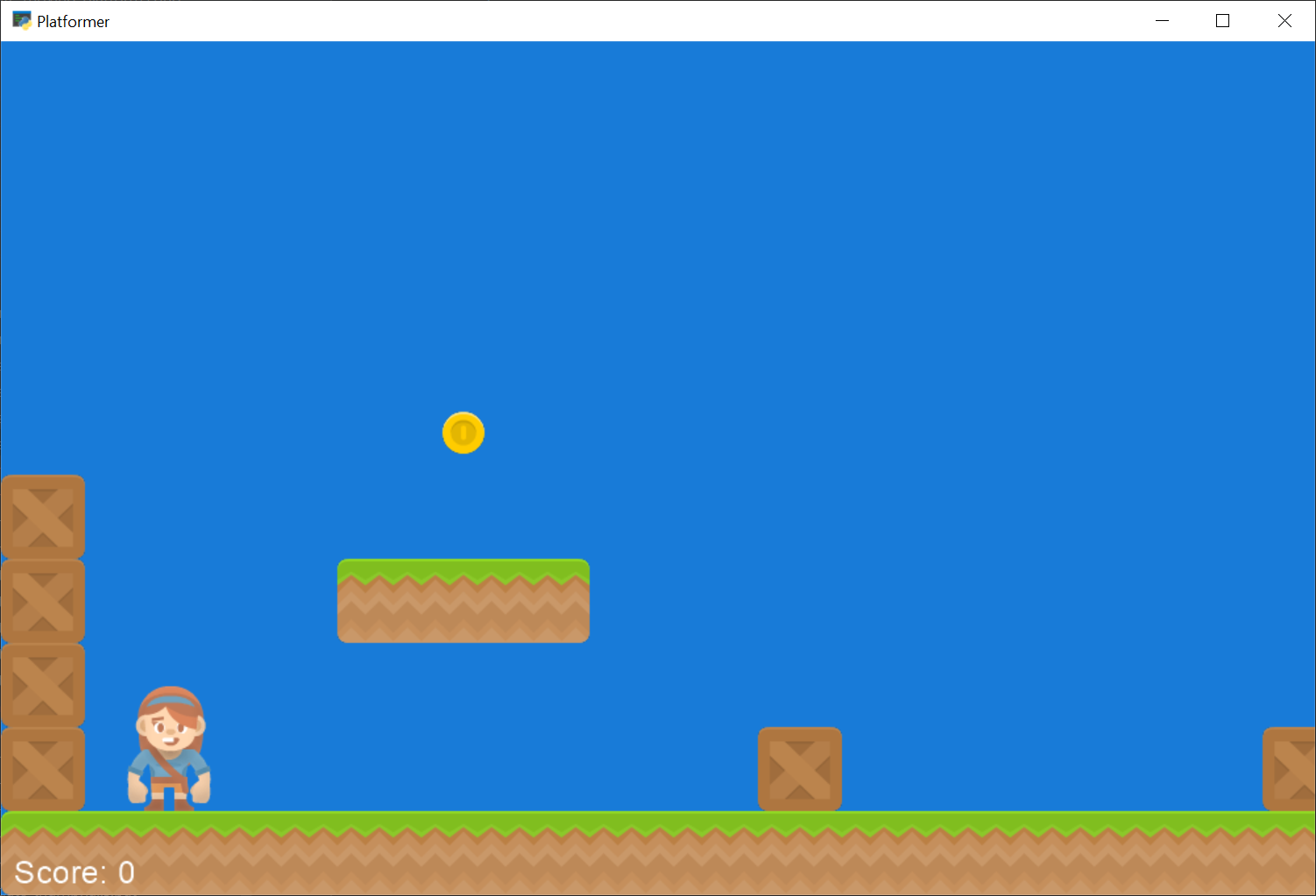
template_platformer.py
1 2 3 4 5 6 7 8 9 10 11 12 13 14 15 16 17 18 19 20 21 22 23 24 25 26 27 28 29 30 31 32 33 34 35 36 37 38 39 40 41 42 43 44 45 46 47 48 49 50 51 52 53 54 55 56 57 58 59 60 61 62 63 64 65 66 67 68 69 70 71 72 73 74 75 76 77 78 79 80 81 82 83 84 85 86 87 88 89 90 91 92 93 94 95 96 97 98 99 100 101 102 103 104 105 106 107 108 109 110 111 112 113 114 115 116 117 118 119 120 121 122 123 124 125 126 127 128 129 130 131 132 133 134 135 136 137 138 139 140 141 142 143 144 145 146 147 148 149 150 151 152 153 154 155 156 157 158 159 160 161 162 163 164 165 166 167 168 169 170 171 172 173 174 175 176 177 178 179 180 181 182 183 184 185 186 187 188 189 190 191 192 193 194 195 196 197 198 199 200 201 202 203 204 205 206 207 208 209 210 211 212 | """
Platformer Template
"""
import arcade
# --- Constants
SCREEN_TITLE = "Platformer"
SCREEN_WIDTH = 1000
SCREEN_HEIGHT = 650
# Constants used to scale our sprites from their original size
CHARACTER_SCALING = 1
TILE_SCALING = 0.5
COIN_SCALING = 0.5
SPRITE_PIXEL_SIZE = 128
GRID_PIXEL_SIZE = SPRITE_PIXEL_SIZE * TILE_SCALING
# Movement speed of player, in pixels per frame
PLAYER_MOVEMENT_SPEED = 10
GRAVITY = 1
PLAYER_JUMP_SPEED = 20
class MyGame(arcade.Window):
"""
Main application class.
"""
def __init__(self):
# Call the parent class and set up the window
super().__init__(SCREEN_WIDTH, SCREEN_HEIGHT,
SCREEN_TITLE, resizable=True)
# Our TileMap Object
self.tile_map = None
# Our Scene Object
self.scene = None
# Separate variable that holds the player sprite
self.player_sprite = None
# Our physics engine
self.physics_engine = None
# A Camera that can be used for scrolling the screen
self.camera_sprites = None
# A non-scrolling camera that can be used to draw GUI elements
self.camera_gui = None
# Keep track of the score
self.score = 0
# What key is pressed down?
self.left_key_down = False
self.right_key_down = False
def setup(self):
"""Set up the game here. Call this function to restart the game."""
# Setup the Cameras
self.camera_sprites = arcade.Camera(self.width, self.height)
self.camera_gui = arcade.Camera(self.width, self.height)
# Name of map file to load
map_name = ":resources:tiled_maps/map.json"
# Layer specific options are defined based on Layer names in a dictionary
# Doing this will make the SpriteList for the platforms layer
# use spatial hashing for detection.
layer_options = {
"Platforms": {
"use_spatial_hash": True,
},
}
# Read in the tiled map
self.tile_map = arcade.load_tilemap(map_name, TILE_SCALING, layer_options)
# Initialize Scene with our TileMap, this will automatically add all layers
# from the map as SpriteLists in the scene in the proper order.
self.scene = arcade.Scene.from_tilemap(self.tile_map)
# Set the background color
if self.tile_map.background_color:
arcade.set_background_color(self.tile_map.background_color)
# Keep track of the score
self.score = 0
# Set up the player, specifically placing it at these coordinates.
image_source = ":resources:images/animated_characters/female_adventurer/femaleAdventurer_idle.png"
self.player_sprite = arcade.Sprite(image_source, CHARACTER_SCALING)
self.player_sprite.center_x = 128
self.player_sprite.center_y = 128
self.scene.add_sprite("Player", self.player_sprite)
# --- Other stuff
# Create the 'physics engine'
self.physics_engine = arcade.PhysicsEnginePlatformer(
self.player_sprite, gravity_constant=GRAVITY, walls=self.scene["Platforms"]
)
def on_draw(self):
"""Render the screen."""
# Clear the screen to the background color
arcade.start_render()
# Activate the game camera
self.camera_sprites.use()
# Draw our Scene
# Note, if you a want pixelated look, add pixelated=True to the parameters
self.scene.draw()
# Activate the GUI camera before drawing GUI elements
self.camera_gui.use()
# Draw our score on the screen, scrolling it with the viewport
score_text = f"Score: {self.score}"
arcade.draw_text(score_text,
start_x=10,
start_y=10,
color=arcade.csscolor.WHITE,
font_size=18)
def on_key_press(self, key, modifiers):
"""Called whenever a key is pressed."""
# Jump
if key == arcade.key.UP or key == arcade.key.W:
if self.physics_engine.can_jump():
self.player_sprite.change_y = PLAYER_JUMP_SPEED
# Left
elif key == arcade.key.LEFT or key == arcade.key.A:
self.left_key_down = True
# Right
elif key == arcade.key.RIGHT or key == arcade.key.D:
self.right_key_down = True
def on_key_release(self, key, modifiers):
"""Called when the user releases a key."""
if key == arcade.key.LEFT or key == arcade.key.A:
self.left_key_down = False
elif key == arcade.key.RIGHT or key == arcade.key.D:
self.right_key_down = False
def center_camera_to_player(self):
# Find where player is, then calculate lower left corner from that
screen_center_x = self.player_sprite.center_x - (self.camera_sprites.viewport_width / 2)
screen_center_y = self.player_sprite.center_y - (self.camera_sprites.viewport_height / 2)
# Set some limits on how far we scroll
if screen_center_x < 0:
screen_center_x = 0
if screen_center_y < 0:
screen_center_y = 0
# Here's our center, move to it
player_centered = screen_center_x, screen_center_y
self.camera_sprites.move_to(player_centered)
def on_update(self, delta_time):
"""Movement and game logic"""
# Set player speed
if self.left_key_down and not self.right_key_down:
self.player_sprite.change_x = -PLAYER_MOVEMENT_SPEED
elif self.right_key_down and not self.left_key_down:
self.player_sprite.change_x = PLAYER_MOVEMENT_SPEED
else:
self.player_sprite.change_x = 0
# Move the player with the physics engine
self.physics_engine.update()
# See if we hit any coins
coin_hit_list = arcade.check_for_collision_with_list(
self.player_sprite, self.scene["Coins"]
)
# Loop through each coin we hit (if any) and remove it
for coin in coin_hit_list:
# Remove the coin
coin.remove_from_sprite_lists()
# Add one to the score
self.score += 1
# Position the camera
self.center_camera_to_player()
def on_resize(self, width, height):
""" Resize window """
self.camera_sprites.resize(int(width), int(height))
self.camera_gui.resize(int(width), int(height))
def main():
"""Main function"""
window = MyGame()
window.setup()
arcade.run()
if __name__ == "__main__":
main()
|